
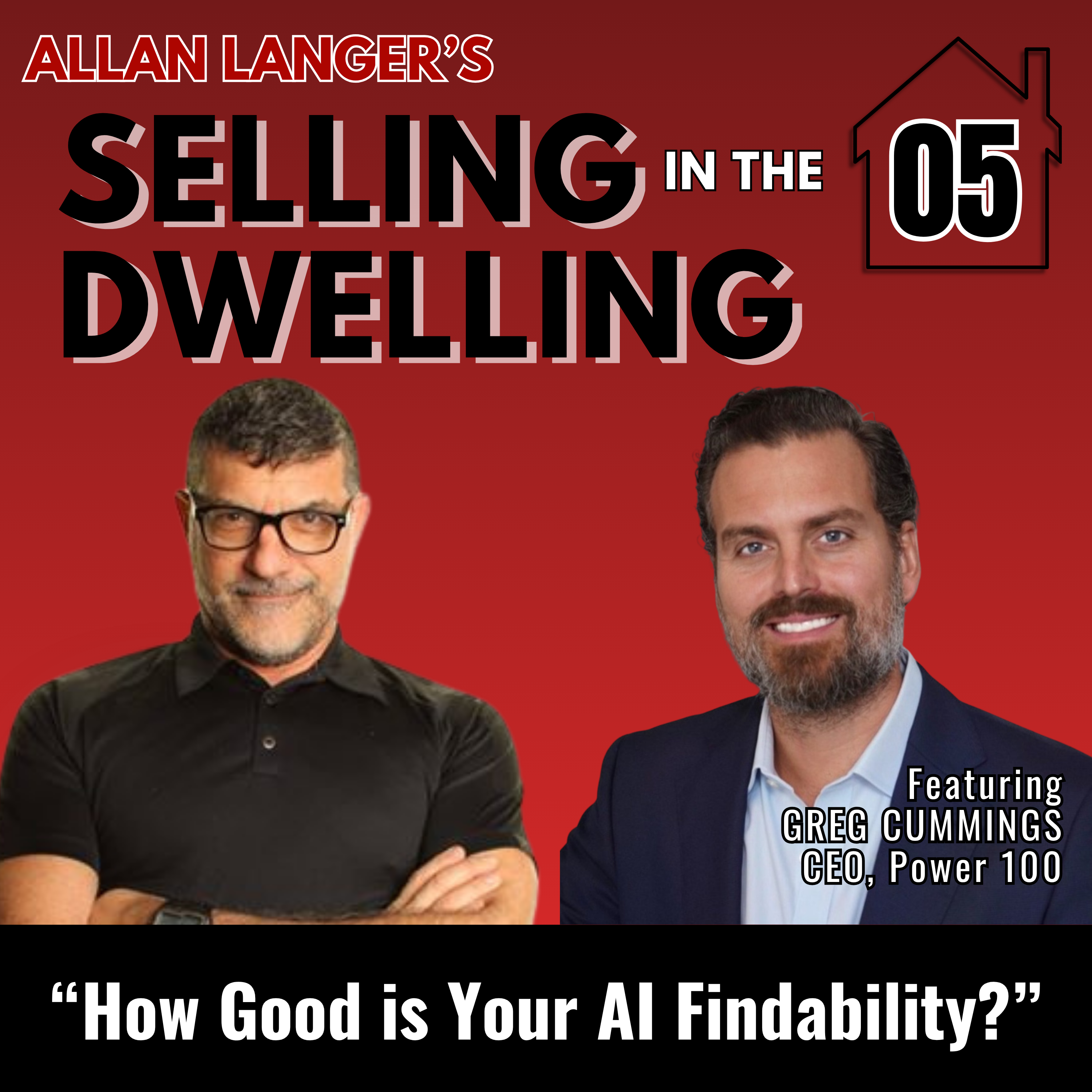
05 - How Contractors Can Win in an AI-Driven Marketplace with Greg Cummings

 Spotify
 Apple Podcasts
 YouTube
 iHeartRadio
 Amazon Music
 TuneIn
 Goodpods
 Podcast Addict
 Podchaser
 RSS Feed
 Greg Cummings of Power 100 has spent years studying what separates great home improvement companies from average ones. Through interviews with industry leaders and Power 100's contractor ranking platform, Greg has seen firsthand that long-term success isn't built on flashy marketing or rapid growth alone. The companies that rise to the top consistently invest in leadership, culture, customer experience, and a reputation that stands the test of time. He shares why some contractors get stuck in the dangerous middle stage of growth while others break through to become industry leaders.
A major focus of the conversation is the rise of AI and what Greg calls "AI Findability." As homeowners increasingly use AI-powered tools to research contractors, trust, transparency, and third-party validation are becoming more important than ever. Greg explains why customer experience now outweighs product alone, how AI is changing the way consumers make buying decisions, and why companies that focus on doing the right things consistently will be the ones that win in the years ahead.
Lessons for Dwellers
- Why AI Findability matters for future growth
- The leadership traits shared by top-performing companies
- How culture impacts customer experience and profitability
- What contractors need to know about the changing buyer journey
- The difference between growth and sustainable growth
Connect with Greg Cummings on LinkedIn: @GregCummings
Chapters
00:00 Introduction to Selling in the Dwelling
02:49 Understanding Power 100 and Its Impact
05:39 The Shift in Consumer Behavior
08:27 AI and Its Role in Home Improvement
11:19 The Importance of Company Culture
14:35 Navigating the Danger Zone in Business
17:19 Attributes of a Great Sales Rep
20:36 Defining Great Leadership
23:18 Advice for Young Entrepreneurs
Connect with your host Allan Langer on LinkedIn: @AllanLanger
Check out Allan Langer's website: The 7 Secrets Sales Academy
Visit our Title Sponsor:
Paradigm Vendo
The Best software for the in-home sales industry!
Visit our sponsor for the Ask Allan segment of the show:
Destination Motivation
Increase your close rate and decrease your cancellations!
SPEAKER_03
Hello, everyone, and welcome back to another episode of Selling in the Dwelling. I'm your host, Alan Langer, and I'm pretty excited today as we kick off, I don't know, episode five, six. I'm not sure where it is. I'm losing count, but I'm having a ball doing this. The podcast I've been wanting to do for such a long time, and now we're rolling along. And I've got another great guest lined up for you today. And we're going to get to Greg Cummings in a second from Power 100. But before we get to that, I just want to mention our friends over at Paradigm Vendo, our title sponsor. They are awesome. If you need a one-stop shop in the house from a software standpoint, check out paradigmvendo.com forward slash dwelling, and we'll have more of that later in the show. So as we get going today, I've spoken to a couple of CEOs now. You've heard from a LinkedIn expert. And now you're going to hear from a gentleman who's kind of an expert in all of it. And it's Greg Cummings. He's the CEO of Power 100, which is a national platform focused on recognizing and elevating top leaders in the home improvement industry. It's not just about the contractor, it's about the companies that work within the industry as well that elevate the industry. And that's what I think what Greg does is so cool. So, Greg Cummings, thanks for joining me on Selling in the Dwelling. How are you?
SPEAKER_04
Alan, I'm pumped to be here, brother. Let's dance.
SPEAKER_03
Let's do it, right? So, Power 100, I think you and I met a couple years ago. We've chatted a few times. You've interviewed, I think what I saw somewhere, over 1,200 people in the home improvement industry. Tell me what you're getting out of that and actually why are you doing what you're doing? Like, what is Power 100 to the people who are listening?
SPEAKER_04
Yeah, well, look, all we do is we sort out the best companies, the best leaders so they can train, motivate, and essentially raise the tide for the entire industry. We believe that great companies have great leaders without exception. And so that's where our ranking system starts. It is a five-layer proprietary ranking system that aligns the intangibles based off of triangular algorithms and a whole bunch of other cool stuff. And we're getting ready actually to potentially open up and make our ranking system completely public so anybody can go see where it is. We currently have over 364,000 contractors in our ranking system right now. 22,000 of them are ranked and 300 of them are published. It's not a pay-to-play. Nobody has applied, nobody has paid. Everybody asks me, Greg, how do you make money? And I'll just say it now because it's always the question. Once you make the list, you can unlock us to go tell your story. So we publish you. Every single person on the list gets one earned media spot a year. If you want anything more than that and you want us to tell your story, your why a little bit more emphatically, this way the world, the internet, and your people understand why you're doing everything you're doing, then that's where we would come into play.
SPEAKER_03
Wow, that's awesome. So it's sort of like a a JD power, but just for the in-home service industry. Is that is that a good correlation, or maybe I'm off base with that?
SPEAKER_04
Yeah. No, that's good. With the exception that, you know, we've we've created it for within the industry. You know, I had a home improvement business that we built and grew from under a million to over 10 million in three years. Then I parted ways from it, decided to do Power 100 full-time because of everything I saw, Alan. It's like all I wanted when we were in the home was to have somebody come over my shoulder that is an unbiased third-party platform that says, Greg is going to take care of you. Even though you see these flashy signs, all these big companies have money to burn when it comes to advertising in leads because their game is just lead, lead, lead, lead, lead, put more on than what we did last month, and everything's gonna be okay. Right. And the problem that we see is that that is not sustainable, right? This industry is not that predictable. We're gonna have ebbs and flows, ups and downs, and the best leaders navigate those with ex with precision. So we can get more into that in a little bit if you like. I'll let you uh take this any direction you want, brother.
SPEAKER_03
No, well, you're you're bringing up an amazing point because I follow a lot of trends. I look at a lot of studies and surveys, and and the one thing I've been seeing, and I mentioned this on a previous podcast, is how sales is changing from a consumer standpoint. And you mentioned the consumer wants someone to tap them on the shoulder with a little help. Can you recommend someone that I can trust rather than me looking at all these flashy ads? And you're putting yourselves in that position to say, hey, we can help you because they're part of our ranking system. But consumers now are doing so much research before they even contact a company. You know, the the one stat I keep going back to that's eye-opening is 68% of consumers are now making their buying decision based on the experience over a better product. So people are saying, you might have the best product, but if you give me a crappy experience, I'm not buying it. What you do in helping them give in that information, I think, is really valuable.
SPEAKER_04
Yeah, and that's been as old as time, right? Look back to Apple, you know, it was the coolest thing. Apple's never put out a finished product, right? They make they finish it while it's in the hands of their consumers. So when you really take a look at what's happening, is the consumer is not only becoming more educated, it's changing. So I talked to a lot of companies that are flat or begging to be flat. All right, they're nervous. These people are still fishing for leads in the same ponds that they've been fishing in for the last 10 years. Think about the problem there, because the internet over here was made for the people that had the money that were trying to sell. So it was a it was a press, if you will, onto the consumer. The internet is, right? With paid ads and all that fun stuff. SEO, I mean, if you had a lot of money, you could be an SEO, right? If you just did your job really, really well and took care of everybody, SEO wasn't your best friend. However, the times are shifting. AI was built for the consumer to allow to see truth in the marketplace. So now when you go on AI, AI's job is to recommend, it's just like your social media feeds. So it's the same algorithm that AI is operating off of, the same concept, anyways. If you go on Facebook, Instagram, YouTube, and your news feed hits you with information that you're not, that you don't want to see, then you're gonna bounce off of it. So the algorithm of the social platform's job is to make sure it's giving you relevant content that you like, that you want to consume, that keeps you there for an extended period of time, ultimately making their company more valuable. The same thing is happening with AI. AI search is taking over the world at the fastest rate of any technology. Seven out of 10 search results are using the AI function or being on the AI platform itself. And so what that means is AI is actually reading and sifting through all of the veneers of, you know, the big boxes and things like that. So when AI is recommending a company to use windows, doors, roofs, siding, pools, decks, docks, you know, fencing, whatever you're trying to do in your home, it is actually going to take a different path. So AI is made for the consumer. And I am not seeing enough companies investing in their AI findability that they should be. You're spending millions of dollars over here on SEO when that market it place is drying up. I we are predicting our analysis by the end of next year, you're gonna see this dynamic shift, a complete 180. 70 to 80 percent of your deals will come from AI findability in one of two ways. The first way is what is the best window company near me, right? But the secondary part is called, we've actually made this term up, the affirmation search. So, Alan, you come out to my house, right? And this is what this is what's gonna be happening, especially in the next, in the next 24 months. You come out to my house, I wasn't expecting to like you so much, Alan. You showed up, you had a great solution. I'm looking at my wife like, honey, this guy's awesome. He's gonna take care of us. We just weren't ready to write the check today, right? We didn't have our pen and our checkbook or our credit card on the desk ready for Alan to take, you know, $50,000 today. So as soon as Alan leaves, we don't do business because we just weren't ready, but we really liked you. And we kind of regret not doing it because now we got to still figure this out. As soon as you leave, me or my wife is gonna get on the AI of some kind and say, Is Alan at dwelling roofing a good choice? This is the affirmation search. And by the way, this is still gonna happen, even if I went forward with you today, Alan. Mm-hmm. And especially if I went forward with you. So companies that don't have an online reputation on AI findability, I believe their cancellations are gonna skyrocket off of this because it's gonna say, ah, you know what, there's some better choices in the area, Alan. Are you sure you want to go with that company? If you're not investing in that, and that's also something that that we heavily are favored, just by doing the right thing over an extended period of time, our articles and our rankings and our evaluations are showing up at a very high rate on AI findability. And it's just super humbling that it's sort of like the the biggest trophy that we could get.
SPEAKER_03
Yeah. I mean, you just brought up a whole Pandora's box here that that I want to dive into a little bit because, first of all, you said some really great terms. AI findability. I've never heard that before. And then obviously the affirmation search, I've actually, it's so interesting that you you mentioned that. I'm gonna get to findability back in a second, but I did a post on LinkedIn a couple of weeks ago about how the search world is changing. What are consumers searching for when they need a home improvement project? And it used to be roofers near me, window companies near me. And what I saw in my research, what's becoming more popular now is how much are roofs near me? How much are windows? And then they go to the referrals, and then they kind of do two or three searches, but at the end, they do the affirmation even after they buy. That's such a great point. And contractors don't think about that. They think, oh, the check is signed, we're done, we're good. You're so right that they need to realize that people are still searching even after the appointment's over. So great, great point. I know what AI findability means, but if I'm a contractor, how do I become more findable in AI? Is there something I can do?
SPEAKER_04
You can do really great business first. You can invest, and this is the commonalities amongst the leaders, the great companies that we see across the nation, okay? They are dedicated to their customer experience by way of their culture. They have leadership development programs that challenge and push their best employees to be better. And then that trickle-down effect makes their customer experience fantastic. That is the focus there. Once you have that, then you can open your doors to the world, be a transparent company. I've said this a couple of times on a couple of my shows. If you're a company out there, I want to challenge you to change the tone and tonality of your company from a company to a network. A network benefits everybody, a company benefits a couple. So if you change the idea that your company is a network, anybody that enters into it, you're going to better them. You need to do more than just the products and services that are rendered. You need to do more than just pay your employees to do their job. And if you're not doing that in today's world, in this ever-changing environment, you're going to fall behind so fast it's going to, it's going to hurt. We also predict a large amount of companies will be going out of business in the next 12 months. And the hotspot for that is going to be from about 9 million to about 30 million. That is the danger hotspot right now. So what we're going to see is this high rate of adoption of this economic and personal shift, whether it's an employee, a homeowner, whatever it is, right? Leadership shift. People that don't adopt this are going to fall down to under that 7, 10 million. And you can still do really good there, man. You can still make a lot of money there. You can have a great life. You can be a community company. There's almost an advantage there. There's almost a safety net there. But you're also going to see people that adopt in this, that adopt these things, they're going to launch. They're going to launch out of that 10 to 30 million and they're going to be 100 million, 150 million. And then we also think in the next four years, we're going to see a billion-dollar independent, privately owned company because of this. So we're super excited about the future. But I think ultimately at the end of the day, to answer your question, Alan, if you haven't already done the work, AI is going to expose you. If you have done the work, AI is going to bring you to the forefront. Now it will help. And that's partnering with the, with, with trusted third parties that will tell your story. One of the biggest misconceptions is, you know, I say, hey, Alan, take a selfie and say, hey, selling in the dwelling is the best podcast in the world. And I send it to you and you put it on your site. That's not a third-person testimonial. That's still first person. It's manipulable and it's not authentic, right? If it's on yours. I mean, it might be, but the internet doesn't AI is not translating it that way. So you have to be partnering with true authentic third-party platforms. If you happen to be ranked, named or mentioned on our site, obviously we have a high level of authority in the space as well, just by luck, by doing the right thing repeatedly.
SPEAKER_03
So you mentioned you have a five-layer ranking system. Can you share what that is?
SPEAKER_04
So up until today, we haven't dived into it uh layer by layer in the details, but I can share with you the outline, okay? There's a couple non-starters to kick it off. After we have the non-starters, we have several triangular algorithms. And this is the leaders, okay? This is not revenue-based. We don't care about the revenue. If I take if I take Michael Jordan from the 90, you know, 97 Bulls and I put him on the 98 Raptors. The 98 Raptors, even though they were a 10-win team that year, maybe, they're still going to be the favorites to win the championship because of that leader. Yeah. So we don't look at revenue as hard as and now revenue is a there is an element called growth that we look at. Now growth is responsible and revenue factors into it, but you also have to grow healthy. So if you think about this, we have non-starters. If you're private equity, franchise, or big box, you're automatically out. Not because we don't think, you know, you're great people. There's a lot of awesome folks in that space. However, when you look at it from a liability perspective, as from the homeowner, the best choice for them is going to be a regionally strong company that's going to be there to support them when they need it. When they need it, the help is going to be six to ten years from now, right? Right. It's not going to be tomorrow. And so the independently owned and operated companies, when their phone rings for a service or warranty, the best companies look at that as an opportunity to market and to follow through on what they say and get referrals, get introductions off the back of those opportunities, right? They don't roll their eyes and look at it as a cost. So private equity, private equity reports to a boardroom. If I and I look, I've been in these boardrooms, guys. I understand how they work. If you do not show profits over a period of time, whoever is running the company could lose their job. So if you're forced to run your company like that, ultimately the decisions you make can be influenced by the security of your future. Now, with that said, there's a lot of amazing guys running private equity and they're doing fantastic. Don't get me wrong. However, in our ranking system, that's one of our non-starters. Because three to six, they're going to sell, flip, and then who knows what the home is. Yeah, I get it.
SPEAKER_03
It makes sense to me, absolutely.
SPEAKER_04
But Alan, on the other side, people are like, oh, well, why do you do that? I go, on the other side, if they're too small or too new of a company, right? Even though they're independently owned and operated, that's also a non-starter because of the numbers and the statistics of success rates. Those guys are unlikely to be there in six plus years, just like the big boxes in the same form or fashion that they are, anyways. So we take a look at these regionally strong leaders and we break them down through triangular algorithms. If this and that, then this would most likely happen. Then we go in and we verify those validations. And pretty soon, hopefully by the end of the year, we're gonna open up everything. So if you're a company out there that wants to know why you're not ranked, you can go on, find your company, you can chat with our concierge why you're not ranked. They'll tell you exactly why you're not ranked, exactly what you need to do. Wow. Ultimately, this is gonna be kind of your cheat code for your AI findability as well.
SPEAKER_03
Yeah, that's terrific. That's such a cool thing. And I love that you're, you know, most of these rankings usually start with revenue. The top 500, it's usually just revenue based, and then there's some other criteria after that. But you're starting with the leader of the company. Now, how do you actually factor in the non-contracting companies, the companies that help home improvement companies get better? Because they're part of your ranking, right? Like one of my sponsors coming up in the Ask Allen segment of the podcast is destination motivation. They're ranked up there with you guys for what they do, correct? How does that work?
SPEAKER_04
Yeah, that's that's a great point, Alan. So we call them strategic partners. So kind of in line with what I said earlier on the contractor, if you're not doing more than what you're contracted to do, you're just not, you're not a leading company. So when we look at our strategic, our strategic partners, we want to serve the contractors the right way. So we take a look at everything that a contractor would need. If you've ever been there, you've ever been a contractor and you've ever been running one of these companies, you are literally working from 6 a.m. to 8 p.m. almost every day of the week, right? Yes, you are. You don't have time to look up. And so never mind when you have a problem, that's just happens to be when your phone rings. Oh, you need leads? Yes, I need leads. We have no appointments tomorrow. Uh, you can get me a hundred leads. Okay, um, just let's sign up. You know, can you what can you do for me? Boom. And that's how it happens. When the fire gets so hot and opportunity happens, that's when transactions tend to happen in our business. So, what we want to do is we want to help these contractors be proactive. So, if and when they foresee a problem, then we have a list of the top 15 strategic partners that do more than what they're just contracted to do for these contractors. And so we rank them based off how many they have on our top 100, the level of influence, the level of public affirmation that they have had that they have had. We want to look at proofs of concept. We talk to their customers, we interview their employees to ensure that everybody believes that their solution is fantastic. So we're actually getting ready to roll out how do you say twice a year program? Uh biannually?
SPEAKER_03
Biannually, yes.
SPEAKER_04
Is that every year, every other year, or is that twice a year?
SPEAKER_03
Biannually is every other year. So I would guess, I don't know. Yeah, whatever. Twice a year sounds good.
SPEAKER_04
Let's say, let's say every six months. Every six, every six months, we're about to roll some more we're gonna be really cool. So we're gonna be polling the employees of all these companies to ensure that they fully believe that the solution is there. Again, we believe that it starts with the leadership, then it goes to the culture, then it goes to the client experience at the end of the day, right? Or the customer experience. That's a little uh dip into the strategic partners, top 15.
SPEAKER_03
Hey dwellers, quick break. Hey, did you know that the closing percentages for in-home sales has been dropping consistently over the last 10 years? It's really crazy, and there's a lot of reasons for it, but one of them is reps have so much to do in the house because there's so many different platforms that you're jumping back and forth all the time. Well, my title sponsor, Paradigm Vendo, takes care of that. In one digital platform, you can go from initial appointment right to final sale and signatures by visiting just their platform. It's amazing. You gotta check them out. It's paradigmvendo.com forward slash dwelling, par-a-r-a-d-i-gm vendo.com forward slash dwelling, because your reps need to give the homeowners a great experience in the house, and jumping around doesn't do that. Visit paradigmvendo.com forward slash dwelling and take care of the experience your reps are giving in the house. You know, when we were talking pre-recording here, you were mentioning a lot of things that you you you kind of mentioned private equity, but you said something earlier that kind of tied it in when you talked about the danger zone based on revenue, like that nine million to 20 million. Why is that? That seems like wow, that's a pretty successful company. Is that the company that's still kind of run by the one guy that's been doing it for 15 years and is working 15 hours a day? Is that that usually where that company falls in? Like, why is that nine to 20, 9 to 30 the danger zone? What makes that tell tell tell me why you say that?
SPEAKER_04
Okay, so we take a look at leadership, identity, and legacy. Okay. Once you start becoming a legacy business, that's when the sky kind of opens up for you. Legacy, how we define legacy is knowing your identity, knowing your systems, knowing your processes, knowing exactly where you're going and knowing exactly how you're gonna do it. Okay. You take a look at the top of our charts, those guys have their legacy product, right? That they're gonna be running with, that they're growing, that they're expanding. Now, when you're in your identity phase, which is the let's just say 10 to 10 to 30 million, you're typically not satisfied, right? You typically are still searching for it, you're really close. Have your identity, but you're not at your legacy stage. And so, in order for them to really find their legacy stage where they they put their stamp in the ground. And I bet you if we interviewed a hundred companies that were between 10 and 30 million, not one of them would be like, yes, we're where we want to be, doing exactly what we want to do, exactly how we want to do it, with the people we want to do it with. You've either one of two things. You're either grown with the team that was under 10 million, which you need to upgrade dramatically in order to get where you want to go to 50 million and beyond, or you have just upgraded your team and now you're paying a fortune for your team. Your overhead is so high because you've upgraded your team. And if you don't get from, let's just say 25 million to 50 or 60 million, you're actually losing money.
SPEAKER_03
Losing money, yeah, yeah. Absolutely.
SPEAKER_04
Does that make sense? So a lot of sense. That zone is kind of twofold. I've seen $30 million companies that are still operating with subordinates, basically, to the CEO. The CEO is still hiring guys that are guys and girls that are under him, but I've also seen a $15 million company where they've hired guys above them. So I'm the CEO of the company. I've hired a sales director, a marketing director, a construction director, and a canvassing director, all of that know more than me. So now my job as the CEO is to support all of these guys to and gals to do their job at the highest level because they're gonna do it a lot better than me.
SPEAKER_03
I mean, and that's what makes a great leader. You look back at all the great leaders, and that's what they said. You know, you know, Steve Jobs said, I don't hire people to tell them what to do. I want I hire people to tell me what to do and to tell us what to do in a company. So I'm gonna ask you two quick questions. First of all, this is called selling in the dwelling. So I have to ask you this question. You've interviewed 1,200 people, you've talked to leaders, you've been in front of all these companies. In your opinion, what do you think makes a great sales rep? What are the attributes you would look for if you're trying to hire a new sales rep?
SPEAKER_04
In today's world, yeah. I think the most important thing is when I look them in the eyes, they're believable over everything. If they got B atderall eyes, I probably wouldn't hire. Okay. If they're sweating profusely and they're nervous on the interview, then they're gonna be nervous in the home or they're never gonna be confident, right? I used to do it this way when I was hiring my company or hiring sales reps for my business, you know, it was a very simple question, Alan. I would look at them and I would say, would I invite them over to my house, let them sit on my couch next to my children? Wow. And if the answer was yes to that, then I would hire them. You know, ultimately, if you can present yourself that way, you're probably coachable, you're probably self-aware, you're probably at a at a you know, you're you're probably motivated, right? To do better. Now, the other side of it is I I have this funny thing where people are like, oh, they're late, forget it. And I go, if they're late, send them over to me. I'll take them. Yeah. I'd rather a team of late guys than a team of people that are sitting there waiting for it. It's kind of a double-edged sword. You have to interview them and have a process, which I did, but like when somebody showed up real early and was sitting there waiting for the job, I don't know, it just didn't feel like they were a leader in the home. You've you've seen Really? That's interesting. Okay. You've seen a great sales rep in action, right? They're usually the guys that you're like scratching your head like, what is going on? How did this happen? But it's because of their blind confidence, right? People are calling us to hire somebody to get it done because we're not going to do it ourselves. Right. And so, along with being able to look them in the eyes and trust them, will they take control of the project? I need you to take control of this project. I need you to give me the keys to this project so I can get it done for you. And that's ultimately, you'll teach them how to how to, you know, run your sales process. You walk in. I have a very, very strict sales process. You know, when I was coaching, you'd walk in, we'd go straight to the point of pain. Hey, I'm here to help you take care of what you called us out. We'd have exactly why they called us out, exactly their name. Take me straight to that pain point of what actually got you to pick up your phone and call me today. Absolutely. Then from there, I would try to stay in that spot as long as possible. And I would try to establish some type of reason, right? Like why? What is this going to do? Purposeful rapport is important. Rapport about nothing is detrimental. Absolutely. So, you know, rapport is getting them to open up and tell you something that they haven't told somebody else. That's how I define rapport. But what makes a great sales rep and who I would hire is can I look them in the eyes? Do I trust them and believe them? And then at some point, are they gonna take control of the meeting? I need them to take control.
SPEAKER_03
That's terrific. And what you said about would I would I have them sit on my couch next to my kids, that's pretty powerful right there. I talk about this all the time. I'm like, my mission is to save the world of sales one team at a time because sales has been broken for so many years and there's so many bad training out there. And sorry, sales managers that are listening, but a lot of you aren't very good. You got to get better. You got to get better training, you got to get better in leadership. You know, it's not just about the numbers, it's not about keeping your thumb on people's back of their necks. You know, you gotta you gotta be much more supportive in a sales leadership role. So that takes me to my second question, Greg. Shifting from salespeople. Now you've seen, you know, thousands of these. Well, what in your opinion, if you can answer this question in a succinct, you know, like I know you can probably spend two hours on it, but what makes a great leader?
SPEAKER_04
I call it Santa Claus. This is called it's ultimately culture. Yeah. But this is the most elementary, and this is one of the things that everybody can relate to. I don't care what your what your faith is, or you know, if you if you grew up with Santa or not, you understand the analogy, okay?
SPEAKER_05
Yeah.
SPEAKER_04
So if we were to go into a class of kindergartners and say around December 12th, let's say, and ask them, hey, are you excited for Santa? You know, well, a lot of the kids in there are gonna be like, yeah, you know, let's just pretend it's a Christian private school that only accepts people that believe in Christmas, okay? Let's just stick with the analogy for the purpose of an analogy. There's gonna be a gleam in their eye, right, Alan? There's gonna be this magic that is intangible. What I'm challenging these companies to do, these leaders, is you have to every single day protect and build around that culture. So why is Santa top of mine around Christmas and not, you know, in March? It's because we take down the decorations, we take down the lights, the Christmas music isn't playing. Out of sight, out of mind, right? So your company has to believe in something that they can't feel, taste, or touch. That's your culture. If I go in and I ask one of your employees, hey, why is your company culture so great? And they can actually physically tell me why, then you don't have a true culture. You don't have a modern word in aura around you, right? You actually, you're just giving them things. Oh, pizza on Fridays, video games on Tuesdays, and you know, it's really cool, you know, we're really laid back here. That's not a good culture. A good culture is everybody is dialed in together and they fully believe the leader of the company is a trickle-down effect from the leader to the sales leader to the to the team in the home. And what's actually happening is if you are not, as the CEO of your company and your executive team and your management team and your leadership team, if you are not selling the dream authentically, you can't make this up. You've got to be authentic in your approach. If you are not selling the dream to your teams every single day, then they will stop believing. Just like people stop thinking about Santa in July. Well, Christmas in July. That it see it picks back up a little bit because why we put a focus on it. You know, the point of the story is what makes a great leader is how focused are you on providing that culture, that experience, and ultimately are you selling your company to your employees every day? Because it's like anything. Once you do it once and you start to get in the rhythm up, we start to take for granted how good we really are. Our sales reps run 10 appointments, you know, all of a sudden they start to take it for granted what an appointment actually looks like and what this opportunity really is. So the best leaders polaroise this culture and this idea that we are the best company and they can prove it. And then once people believe that this is the best company in the world to work for, because of the opportunities that are here, because of how much we care about you, because of everything that we that you can achieve here, that's when your employees, that's when your culture is going to be exceptional. And that is when it's gonna transfer into higher sales conversions, higher margins, healthier business, more introductions. The happiest customer is sold the highest product at a high rate because you've shown the value. So the test of this, Alan, is if I can go in to a sales room and say we're gonna raise the prices 25% this week, no questions asked. Who walks out that door and says, Oh my God, we're not gonna get any business? And who says, No problem, we got that value.
SPEAKER_03
You that you just hit on the thing that drove me crazy when I was in sales, when I was working with companies. Every sale, almost every sales rep in every room, when you say we're raising our prices, everyone goes, Oh my God, again. When I sat there and they said that, I'm like, guys, the customers don't know we raised the prices and everything's worth it. Like, what are you talking about? So it's that mentality that when you say that and all your reps go, oh, you got the wrong reps in the room. That's what it comes down to.
SPEAKER_04
Or if I'm the CEO and having a conversation, we have the wrong leadership in place, right? Like let's say, let's say the reps keep getting phone calls about guys going to the bathroom in the master, in the master's, you know, bathroom at the house, or they're sloppy, or you know, we're late, or we're we're we're missing caulking lines, or the back end of the business is not buttoned up. Nobody called me. You guys just showed up. What's going on? Right, right. So there's a responsibility and a duty that the the CEO has, not just to focus on the sales team. That's what I said. When I said authentically, that means that it truly has to be the best. Now, you don't have to be perfect to be the best, guys. You just have to react the right way when things happen. So your team knows that you have their back, right? So then they can have your back. It's that simple. So if you don't have every aspect of your business, it's just like a football team. You have special teams, offense, defense, your coaching staff, your head coach, and your ownership, your leadership, your GM. If everybody's not firing on all cylinders, and if every single role doesn't believe that this is the best and that they're doing a great job because they know how to do their job, they've been trained, they're motivated, and they're targeted on what they need to do to achieve top tier, then you're not gonna be a championship contending team. So before you go put pressure on your sales team, you better make sure the back end of your business is buttoned up this way you actually look like you know what you're doing and you actually believe it. So the simple question is do you believe that your company is the best company? Do you believe that every customer that you sit in front of should should hire you? Because it's the best. Now it doesn't have to be the best, but how I want you to think about this is are we ever gonna let a customer down? And if the answer to that is no, then you are the best company. There could be multiple best companies.
SPEAKER_03
Absolutely. 100%. Hey, sellers and dwellers. So the next segment of selling in the dwelling is sponsored by our friends at Destination Motivation. You know, what would a 33% increase in close rates and a 55% reduction in cancellation rates be worth to you? Well, check out Destination Motivation because that's exactly what they can do for you. You want to visit www.increaseroursales.com for more. Now let's get to the Ask Allen segment. We're at the Ask Allen segment of the podcast, and the Ask Allen segment is sponsored by Destination Motivations, our friends over there. You can get their their website and all the awesome stuff that they do to help you sell more in the show notes. We've got a really interesting question, and I love this guy's name. This question came in from Boston. By the way, where are you from, Greg?
SPEAKER_04
Trick question. So I'm born, I'm born and raised in Clearwater, Florida. Yeah, then I lived in Boston for uh a number of years, a long time. But I got a bunch of family friends up there. It's my best.
SPEAKER_03
Listen, well, I'm in Rhode Island, so next time you're here, let's uh let's grab a uh coffee or a beer. So, okay, this guy, Jimbo, Jimbo from Boston, Massachusetts, writes in, I am not happy in my current position as an in-home sales rep for the company that I'm currently working for, and I want to start looking elsewhere. What advice can you give me as I'm looking at a new company? What should I look for in that company that I want to work for?
SPEAKER_04
All right, Jimbo. First of all, brother, I would say, do you really want to be in sales? It's not always just greener on the other side of the fence. If you're not happy where you are, you're not going to be happy where you're going. Period, end of story. I think one of the most important things, and it's a buzzword for me, happy. So is happy because of who you're working for, is happy because of the environment, is happy because you look like a fool in front of your customers because you promise them one thing. I think you have to really self-analyze, like, what is the is the route? And then if you're really not happy with the delivery and it's the whole process of the company itself, the leadership, this is a free reign for you to go try to fix it. So work on your skill to personally level up. Start having conversations that you've never had. It's a free reign at it, right? Like, why not try to make somebody better, but do it respectfully and do it the right way. Schedule meetings with leadership and say, this is what I'm seeing. What do you guys see? Show a level of maturity that you haven't shown. My strongest piece of advice to not just Jimbo, but anybody. Like, if you're gonna leave a company, don't just wait until you have another job. Go try to level up yourself and have conversations, get in different rooms. You have nothing to lose at that point. And nine out of ten times your leadership's gonna really like that, respect that. And um unless unless you guys just have had a major falling out, then that's maybe a totally different story. But I just it took me so long to try to self-improve and self-learn. I didn't do that until I was 30 years old. You know, up until then, I was just running hard. I outworked you. Whatever I had to do, I was gonna win. But it was just out of pure blunt effort. Then I started to really learn when it was 30. Then I started to walk into rooms that I hadn't been in. Then I started to, you know, buy companies, then I started to lead companies from other countries, helping them. Like when you start to walk in different rooms, sometimes your perception changes. And you know what? It might be your fault that you're not happy right now in your current role as well. It might be something that you didn't that you thought was one thing, but really it's something else. So I would say I would seek it out. I had somebody on my show the other day and they said, like, if there's a fire burning, don't put the fire out right away. Okay, go find why the fire started and and diagnose why it started while that fire is burning. Because it's gonna put a greater sense of urgency for it to never happen again, and you're gonna solve that problem a lot faster. So do your feelers, go try to find companies that you you you think would be a good fit. But at the end of the day, you know, it I think it comes down to you, and it shouldn't be an emotional response of happy. It should be I'm not able to achieve what I want to do because of X, Y, and Z. I have then taken these courses of actions, talked to them, them, them, presented, asked, offered, and was open to anything. Now and only now am I gonna be able to find the right company because I actually know what I'm looking for now. Currently, Jimbo, you don't know what you're looking for.
SPEAKER_03
That's amazing advice. And I love what you said about go have a conversation. If you see something wrong, if you see the back end, these installers are not doing what they're supposed to do. They're not putting the drip edge the right way, or they're not wrapping the window, whatever. I see that. Most sales reps just complain to other sales reps about it. They just keep every they never talk to the leadership, or God forbid, I used to call my installation manager all the time. We we would get at it sometimes when I was selling windows, but then at the end of the day, he'd come up to me and say, Thanks for letting me know. I had to fix that. I'm sorry I yelled at you before, but you called me at a bad time. Like, hey, we just want to get the job right for the customer. And but so many sales reps, like, uh, we don't have enough leads. This place sucks. And that's it. That's what they do. And then they go home and play Xbox and they complain that they didn't get a lead that day instead of, you know, getting out and getting some referrals and self-gen. So really great advice. Yeah. So, Jimbo, good luck to you. And, you know, write right back in and let us know how you're doing. And uh, but that's a great question and with a terrific answer by Greg. All right, my friend, we are almost at 45 minutes, so uh, I will not keep you any longer, but this has been great. Let's end with if you had to give any advice to these young entrepreneurs, they just started a home improvement company or they or they're moving along. You know, you gave some great advice as well or already. Would you end with anything as far as any last piece of advice?
SPEAKER_04
I would say this: if you start a company or you got a smaller company, don't be in such a rush to get distracted by AI and all this technology. Get your people, get your process, get a reputation that is rock solid, and then slowly build your AI. Because the number one thing that I'm seeing, and I didn't talk about this earlier. We could talk all day, Alan, two days, three days. But like fractured tech stacks are really what's taking people down right now. And so the trust bridges are being broken from an internal culture perspective because these fractured tech stacks that just testing everything, oh bring this in, bring that in, shiny object syndrome, right? Is really sinking the trust and killing the culture. So what I would say is do what you know really well, hire people that compliment you in a way that that you can't do. Take care of your employees and let your employees take care of your customers. And then find a way to close that circle. And then once you do that, then you're able to really branch out, attend some events, get a circle around you of people that are bigger than you, that have done this before. This industry, why I love it, why I stay in it, why I'm so fortunate, I feel so fortunate to be in it, is because we are around the most open people. They are so willing to share whether you're competition down the street or you're on the other side of the country, there's so many guys out there that are just willing to share what works for them because there's really a commonality between all the leaders that I talk to. Everybody wants to make this industry better than when they found it, because at the end of the day, this industry has given them everything and they're very grateful for it. That would be my little bit of starting out advice.
SPEAKER_03
Greg, how can people find you if they want to look into Power 100 or find you? Where do they go?
SPEAKER_04
Yeah, you can go to power100.io. Be sure to check out the inner circle. We're gonna have a bunch of shows in there, a bunch of industry-dedicated leadership shows. We're also gonna have my show in there, PowerChat. We're gonna do over 200 episodes on PowerChat this year, talking to amazing leaders across the country. And uh Inner Circle is kind of that centerpiece, the Netflix for the industry, if you will, on power100.io, just click inner circle completely free, and it will stay free for leaders. So check it out. That's the hot thing that's going on right now. If you want to follow us on any social medias, do what you have to do. Like, follow, subscribe. So our stuff pings pings your news feed. We appreciate it.
SPEAKER_03
And and it's Greg Cummings, the C U M M-I-N-G-S on LinkedIn. He is pretty active on LinkedIn as well. So, Greg, I can't thank you enough for joining me on Selling in the Dwelling. Can't thank you, my listeners, for joining us here. And remember, my title sponsor, paradigmvendo.com forward slash dwelling, talk about fractured tech stacks. Paradigm Vendo takes care of that as they are one-stop shop software. So check them out and also check out Destination Motivation. That's it for us, everyone. Greg, thanks again, and thank you. We'll see you next time on Selling in the Dwelling.
SPEAKER_00
Selling in the Dwelling.